She Got the Call Every Daughter Dreads. Her Father Was Found Wandering a Highway at 3 AM. What She Did Next Saved His Life.
I need to share something with you that most families only learn when it's too late.
Something that could change the next twelve months for someone you love.
Something that explains why you lie awake at night wondering if your parent is safe. Why you check your phone every hour. Why you feel a cold wave of panic every time you get a call from an unfamiliar number.
That fear is not irrational.
I'm going to explain why in the next few minutes.
Most people never connect what's on their plate — or in their cup — to what's happening in their mind. But research now suggests that certain everyday foods and popular beverages — particularly those high in refined sugars, artificial additives, and ultra-processed ingredients — may quietly interfere with the brain's ability to maintain focus, recall, and mental clarity over time. Highly refined breads made from processed white flour, for example, are among the most commonly consumed foods linked to rapid blood sugar spikes — a pattern that, over time, researchers have associated with increased mental fatigue and difficulty sustaining focus.
Most people never connect what’s on their plate — or in their cup — to what’s happening in their mind. But research now suggests that certain everyday foods and popular beverages — particularly those high in refined sugars, artificial additives, and ultra-processed ingredients — may quietly interfere with the brain’s ability to maintain focus, recall, and mental clarity over time. Highly refined breads made from processed white flour, for example, are among the most commonly consumed foods linked to rapid blood sugar spikes — a pattern that, over time, researchers have associated with increased mental fatigue and difficulty sustaining focus.
Most people never connect what’s on their plate — or in their cup — to what’s happening in their mind. But research now suggests that certain everyday foods and popular beverages — particularly those high in refined sugars, artificial additives, and ultra-processed ingredients — may quietly interfere with the brain’s ability to maintain focus, recall, and mental clarity over time. Highly refined breads made from processed white flour, for example, are among the most commonly consumed foods linked to rapid blood sugar spikes — a pattern that, over time, researchers have associated with increased mental fatigue and difficulty sustaining focus.
But first, I need to tell you about Robert.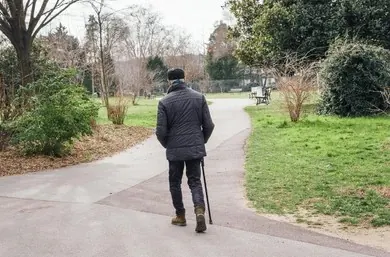
Robert Whitfield is 76 years old. He lives in Tampa, Florida. He was a high school principal for 32 years. A man who could recite poetry, solve crossword puzzles in ink, and remember the name of every student who walked through his doors.
Two years ago, things started to change.
Small things at first. He'd forget where he put his keys. He'd call his daughter Karen by her sister's name. He'd tell the same story twice at dinner without realizing it.
Karen told herself it was normal. "He's just getting older," she said. "It happens to everyone."
Then came the night that changed everything.
At 3:14 AM, Karen's phone rang. It was the Tampa Police Department.
They had found Robert walking along a four-lane highway. In his pajamas. No shoes. No phone. No identification.
He couldn't tell them his name. He couldn't tell them where he lived. He kept asking for his wife, Margaret, who had passed away six years earlier.
A trucker had spotted him in his headlights and called 911. If that truck had come ten seconds later, Robert would have been hit.
Karen drove forty minutes to pick him up. When she arrived, her father looked at her and smiled.
"Karen! What are you doing here? I was just going for my morning walk."
It was 4 AM. It was 38 degrees outside. He had no idea what had happened.
That night, Karen sat in her car in the driveway and cried for an hour.
The Silent Crisis Nobody Talks About
Here's what Karen didn't know that night, and what most families don't know until it's too late:
6 in 10 people experiencing cognitive changes will wander. Not might. Will.
It's not a question of if. It's a question of when.
And when it happens, the clock starts ticking. If a person who has wandered is not found within 24 hours, the chance of serious injury or worse increases dramatically.
Think about that for a moment.
Your father, your mother, your spouse... they could walk out the front door at any hour. They might not know where they're going. They might not know how to get back. They might not even remember their own name.
And you would have no way to find them.
No way to call them. No way to know if they're safe. No way to guide them home.
That's the reality millions of families live with every single day. And the traditional solutions? They don't work.
Why Everything You've Tried Isn't Enough
Most families try the same things:
Door alarms. They tell you someone left, but they don't tell you where they went. By the time you hear the alarm, they could be two blocks away and heading toward a busy intersection.
ID bracelets. Useful, but only if someone finds your loved one AND reads the bracelet AND calls the number. That's three things that have to go right, in the right order, at the right time.
Cell phones. A person experiencing cognitive changes won't remember to carry a phone. Won't remember to charge it. Won't answer it when you call. And even if they do answer, they may not be able to tell you where they are.
Locking doors from the outside. This is what many families resort to out of desperation. But it creates a new danger: what if there's a fire? What if there's a medical emergency? And beyond that, it strips away the last shred of dignity and independence that your loved one still has.
Here's the painful truth:
You can't watch someone 24 hours a day. You have a job. You have children. You need to sleep. You need to live your own life while somehow keeping another person alive and safe.
The guilt is crushing. The anxiety never stops. And the fear, the fear that one day you'll get that call... it follows you everywhere.
What Karen's Doctor Told Her That Changed Everything
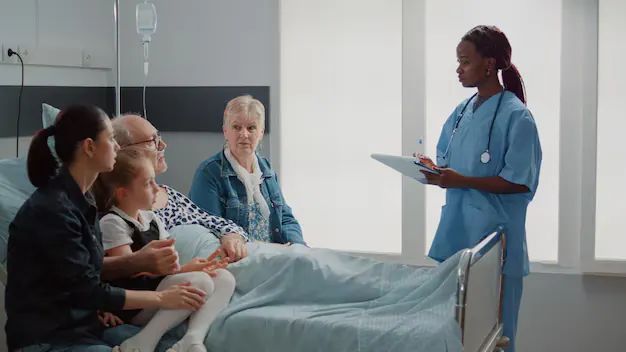
Three weeks after the highway incident, Karen took Robert to his neurologist.
She expected more tests. More prescriptions. More vague advice about "creating a safe environment."
Instead, Dr. Patricia Nguyen said something Karen didn't expect:
"Have you heard of assistive tracking technology?"
Karen hadn't. She thought GPS trackers were for teenagers and delivery trucks.
Dr. Nguyen explained that in the last few years, a new category of wearable technology had been developed specifically for seniors experiencing cognitive changes. Not the bulky, stigmatizing ankle monitors. Not the basic tile trackers that lose signal indoors.
Something different. Something designed from the ground up for exactly this situation.
She told Karen about a device that looked like a regular wristwatch. One that Robert could wear all day and all night without even thinking about it.
A device that would let Karen:
See Robert's exact location in real time, whether he was at home, at a community center, or wandering a street he didn't recognize.
Get an instant alert if he left a designated safe area, like their neighborhood, at any hour of the day or night.
Speak directly to him through the watch, using a built-in speakerphone, even if he didn't press a single button.
Guide him back home using the live map and voice connection, or call emergency services with his exact coordinates already shared.
Know immediately if he fell, with automatic fall detection that sends an alert and opens a voice line without Robert needing to do anything.
Karen was skeptical. After years of broken promises from products that were supposed to help, who wouldn't be?
But she had nothing left to try.
That weekend, she set up the device. Put the watch on Robert's wrist. He looked at it and said, "That's a nice watch, Karen."
He never took it off.
What a Day Looks Like When You Finally Have Peace of Mind
Robert wakes up and puts on his watch, just like he puts on his shoes. It's part of his routine now. Karen gets a quiet notification: "Robert is active at home." She hasn't even gotten out of bed yet, and she already knows he's safe.
Robert still likes to walk around the block. Before, Karen would either cancel her plans to follow him or spend the entire time sick with worry. Now she watches his blue dot on her phone. He walks his usual route. She drinks her coffee. Both of them get to live their morning.
One Tuesday, Robert turned left instead of right. He walked past the park, past the church, into a neighborhood he'd never been in. Karen's phone buzzed: "Robert has left his safe zone." She opened the app, saw exactly where he was, and pressed one button. Robert's watch rang. She said, "Dad, turn around and walk back toward the big oak tree." He did. Crisis averted in ninety seconds.
Robert goes to the senior center three times a week. The device uses indoor location technology to confirm he arrived safely, even inside the building. Karen gets a notification: "Robert arrived at Pinecrest Senior Center." She doesn't have to call. She doesn't have to wonder. She just knows.
Robert presses the single button on his watch. It calls Karen instantly. "Honey, can you pick me up? I'm tired today." No menus, no passwords, no confusion. Just one button, one call. Connection when it matters most.
Last month, Robert stumbled in the bathroom. The watch detected the fall instantly. Karen's phone rang within seconds. The watch answered automatically, no button press needed, and she could hear him. "Dad, are you okay?" He was fine, just tripped. But if he hadn't been fine, help was already on the way.
Karen isn't doing this alone anymore. Her brother in Chicago and her sister in Atlanta are both connected to the app. All three can see Robert's location. If Karen is in a meeting and an alert comes in, her brother can respond. If Robert needs help and Karen's phone is off, her sister gets the notification. One family. One network. No gaps.
Karen checks the app one last time. Robert is home. He's safe. She puts her phone on the nightstand and, for the first time in two years, she actually sleeps through the night.
Six Months Later: What Happened to Robert
Remember Robert? The man who was found on a highway in his pajamas?
Six months after Karen started using this device, here's what changed:
Robert still lives at home. Not in a facility. Not in assisted living. In his own house, with his own garden, his own routine, his own dignity.
He still takes his morning walks. He still goes to the senior center. He still calls Karen to chat about the weather and complain about the Buccaneers.
The difference is that now, Karen doesn't have to choose between her father's safety and his freedom. She doesn't have to choose between caring for him and living her own life.
He hasn't wandered unsafely since.
Not once.
And when he does start to drift, Karen knows within seconds. She can see him, talk to him, and guide him home.
Last Thanksgiving, Karen's brother flew in from Chicago. He hadn't seen Robert in a year. He pulled Karen aside and said:
Karen didn't give him his life back. The technology did. She just had the courage to try it.
Families Across the Country Are Experiencing the Same Thing


Two Paths. Two Futures.
- Constant anxiety every time your loved one is out of sight
- Sleepless nights wondering if they've left the house
- Quitting your job or canceling plans to supervise them
- The inevitable conversation about assisted living
- One wandering incident that could change everything
- Know their location any time, from anywhere
- Get alerts before a situation becomes dangerous
- Talk to them instantly through the device
- Let them keep their routines and their dignity
- Help them stay home longer, safely and independently
How It Works: Four Simple Components
You Only Choose Your Plan.
- FREE GPS Watch Device
- Real-time location tracking
- Two-way speakerphone with auto-pickup
- Fall detection & emergency alerts
- Multiple family guardians supported
- Live location sharing with first responders
- 30-day satisfaction guarantee
Take the Quiz: Which Device Is Right?
Why I'm Sharing This Story
I could have kept this to myself.
I wrote about caregiving for seven years before I found this technology. I watched my own mother wander away from her home twice before we found a solution. The first time, a neighbor brought her back. The second time, she was missing for four hours.
Four hours of calling her name. Driving through streets. Calling hospitals. Imagining the worst.
I know what that fear feels like. I know the guilt that follows it. I know the exhaustion of being a caregiver who is always "on," always vigilant, always one phone call away from disaster.
No family should have to live like that.
Not when something this simple exists.
Not when a watch on your loved one's wrist can mean the difference between a safe return and a tragedy.
If you're reading this and you recognize yourself in Karen's story, if you've had that 3 AM moment, or you're terrified that it's coming, please don't wait.
The families who act today are the ones who avoid the call tomorrow.